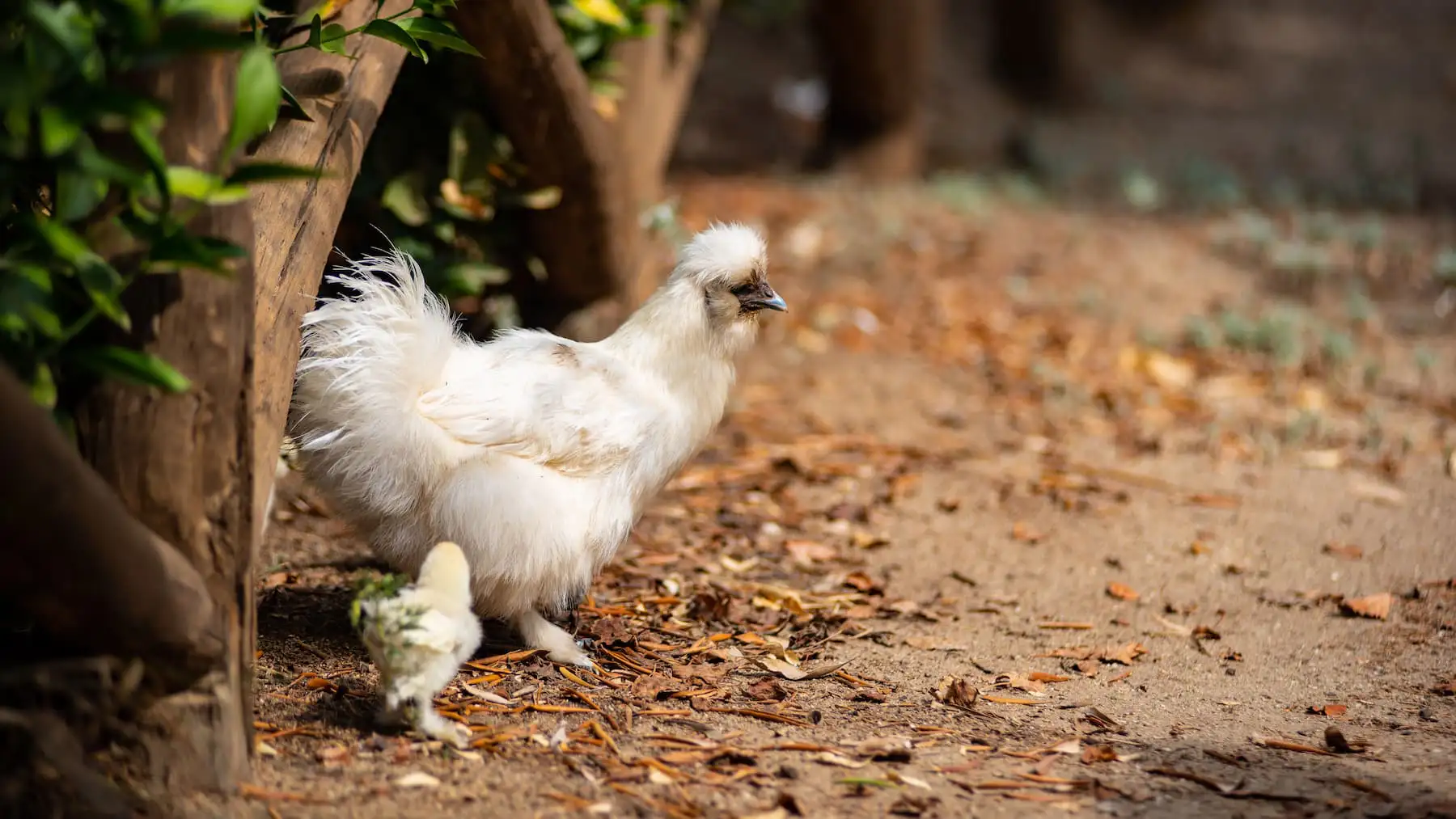
Heat and chickens – you shouldn’t underestimate this combination. Chickens are covered in warm plumage and can’t sweat. The good news is that, with the right measures, you can help your chickens get through even the hottest summer days without them coming to any harm. Here’s a little preview: this year (2026), our silkies have actually coped quite well with the regular temperatures of almost 104 °F in the shade. You can find out how we managed it here.
The feather problem: Why chickens come under pressure in the heat
So you shouldn’t underestimate this!
Their often magnificent plumage keeps chickens nice and warm in winter, and in summer they would certainly be happy to shed it every now and then. I don’t think you can compare this to a person wearing a thick jumper in summer, though. Why? Because chickens are birds, after all! That’s why they generally cope much better with temperature fluctuations than we do.
Chickens have no sweat glands and can therefore only release excess body heat via their beaks. Through a process known as panting – where they keep their beaks wide open and stick their tongues out slightly – they can evaporate moisture via their respiratory tracts and thus cool their bodies down a little.
However, this only works as long as the air is dry enough. And this is where the greatest danger lies: it is not the temperature alone, but the combination of heat and high humidity that causes chickens the most distress. Just as for us humans, a muggy day at 82 °F degrees can be more stressful for your chickens than a dry day at 92 °F.
How to recognise heat stress in your chickens
The sooner, the better!
The following signs indicate that your chickens are struggling with the heat:
Open beak and rapid, shallow breathing: the chicken is panting.
Drooping, slightly open wings: the chicken holds its wings away from its body to create more surface area for cooling.
Lack of movement: the hen is lethargic and barely moves.
Loss of appetite: the hen is eating significantly less than normal.
Fewer eggs: egg production drops because more energy is needed to regulate the hen’s body temperature.
Thinner eggshells: due to heat-induced disruption of calcium metabolism and the shell gland, the eggshell may not form properly or, in some cases, not at all (wind egg).
Pale combs: a pale, purplish appearance of the comb is a warning sign and may indicate circulatory problems.
> MY TIP: “Hens often only show signs of weakness at a late stage. They are generally very hardy, and only when something fundamental is wrong do they suffer visibly. It is therefore better to take preventative measures than to wait and see.”
But how can you take preventative measures?
Shade is essential
This is the most important – and at the same time the simplest – measure!
Chickens need to be able to reach a cooler, shaded spot at any time without having to travel far. Natural shade provided by trees and shrubs is the best solution, as it cools the area (through transpiration from the leaves), offers protection from birds of prey and keeps the birds occupied. Hardy woody plants such as elder, cornelian cherry, hazel and rosehip are particularly suitable.
If, or whilst, there is no natural shade yet (e.g. in a newly laid-out garden), artificial shading combined with fast-growing shrubs (e.g. elder) can serve as a good temporary solution for the first few years. Options here include a sunshade net, a tarpaulin or a simple wooden roof. It is important to ensure that there is sufficient air circulation beneath this shade.
> My TIP: “Make sure there’s a place for dust bathing even in the shade. The cool earth also helps your chickens to cool down.”
Water, water, water
Your chickens must have access at all times!
As well as plenty of shade, fresh, clean water is particularly important – ideally nice and cool too. And this is where one of the most common mistakes lies: although there is water available, it gets too warm, or it leaks or is spilled. This can have fatal consequences, as chickens need many times more water on hot days than on cool or cold days.
Practical tips:
Place the water trough(s) in a shady, cool spot. Never in direct sunlight.
If you have a large outdoor run, you should consider setting up several drinking stations so that your hens have shorter distances to walk to reach the water.
If you want to look after your chickens properly, change the water several times a day on particularly hot days or cool it down, e.g. with ice cubes.
A dash of naturally cloudy apple cider vinegar or a pinch of bicarbonate of soda in the drinking water also helps maintain their electrolyte balance.
Clean the drinkers regularly to keep them nice and clean.
> My TIP: “A great way to keep things cool is to lightly moisten the ground in the run. Wet soil noticeably cools the area close to the ground. On particularly hot days, our automatic garden watering system takes care of this for us.”
One more thing: if you’re lucky enough to have a natural water source (e.g. a pond or well), then the issue of ‘water’ is sorted for you and your chickens in one go.
> My EXPERIENCE: “Since we’ve had the little natural pond in the garden, I haven’t had to worry about water at all. At most, I just have to break the ice in winter if necessary.”
The heatwave: What to do in an emergency?
When things get serious, every minute counts!
Heat stress is a matter of comfort; heatstroke is a matter of survival. If, despite all precautions, a chicken collapses, is barely responsive, is staggering or is already lying unconscious on the ground, you must act immediately.
First aid for heatstroke:
As mentioned: act immediately – every minute counts now.
Move the bird to a cool, well-ventilated place.
Spray it with cool, but not ice-cold, water, or place the chicken in cool water (a cold shock would put the bird under additional severe stress).
Ensure there is air circulation, for example with a fan.
As soon as the bird regains consciousness, offer it water (but do not force it!). If necessary, help the chicken recover with an electrolyte solution (e.g. 1 tsp sugar, 1 tsp salt and 1 tsp bicarbonate of soda in 1 litre of water).
If the bird remains unconscious for a prolonged period, is having convulsions, or does not recover after a few minutes: contact a vet immediately.
Heatstroke can also occur in healthy birds if a combination of unfavourable circumstances arises: direct midday sun, little wind, and no water.
> My WARNING: “Brooding hens are particularly at risk because they often leave their nest or eggs only very rarely and reluctantly.”
The invisible danger: red bird mite
A parasite that thrives in the heat.
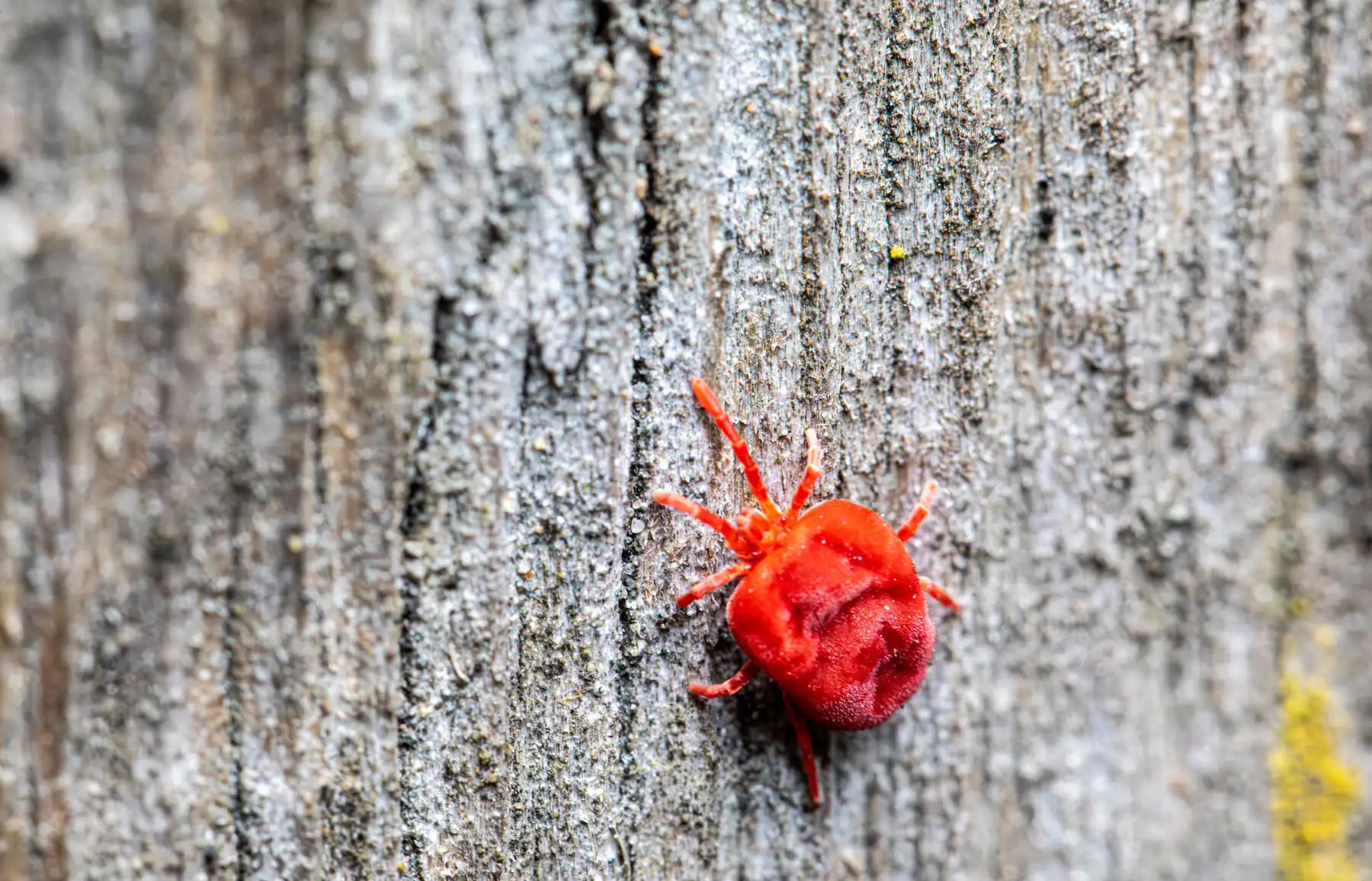
Chickens weakened by the heat may encounter a parasite that, in turn, thrives in the heat: the red bird mite (Dermanyssus gallinae). These tiny parasites, which crawl out of the cracks and crevices in the coop at night to feed on blood, multiply explosively in summer temperatures.
The problem is that you can hardly see the mites during the day, as they hide in the cracks and crevices and under the nesting material. At night, they attack sleeping chickens and suck their blood. In the morning, they disappear back into their hiding places.
A severe mite infestation leads to anaemia, weight loss, feather loss and, in the worst cases, death. This can happen particularly in young or weakened birds.
How to recognise an infestation with the red bird mite:
Chickens scratch and peck at themselves excessively at night (think of a camera)
They sleep restlessly and leave their perches
Certain areas of the coop where the hens would normally be found are avoided, or they no longer enter the coop at all in the evening
You find tiny red or grey specks in cracks in the coop and under the perches
Here’s what to do:
Thoroughly clean the coop if there’s a mite infestation. Remove all litter and dispose of it in the external organic waste bin: do not leave it in the garden! Treat all surfaces – but especially the cracks and crevices – with a suitable product (diatomaceous earth or other approved products). Our chicken coop is designed in such a way that it makes life noticeably harder for mites right from the start: smooth surfaces, few gaps and, as it can be completely dismantled, no areas that you can’t reach during a thorough clean. Since we started using a Hanehus chicken coop ourselves (over 5 years ago), we haven’t had a mite infestation.
Regular checks in summer are essential!
> My EXPERIENCE: “You first have to learn to spot these mites, because they hide during the day and are almost impossible to see. With our first chicken coops, which we bought from a shop, we had bird mites, and I only discovered them once there were already many, many thousands of them and one hen had already been severely affected.”
Conclusion:
Chickens generally cope well with summer heat, but it should not be underestimated. Their plumage, their inability to sweat and their sometimes delicate circulatory systems mean that you should generally keep a close eye on them on particularly hot days. The most important protective measures – namely shade and fresh water – are easy to put in place. If you also keep an eye out for red mites, recognise heatstroke in a chicken straight away, and know what to do in an emergency, you’ll get your chickens through even the hottest summer just fine.